
The ROI of Media
The ROI of real estate media: how to think about spend on your next listing
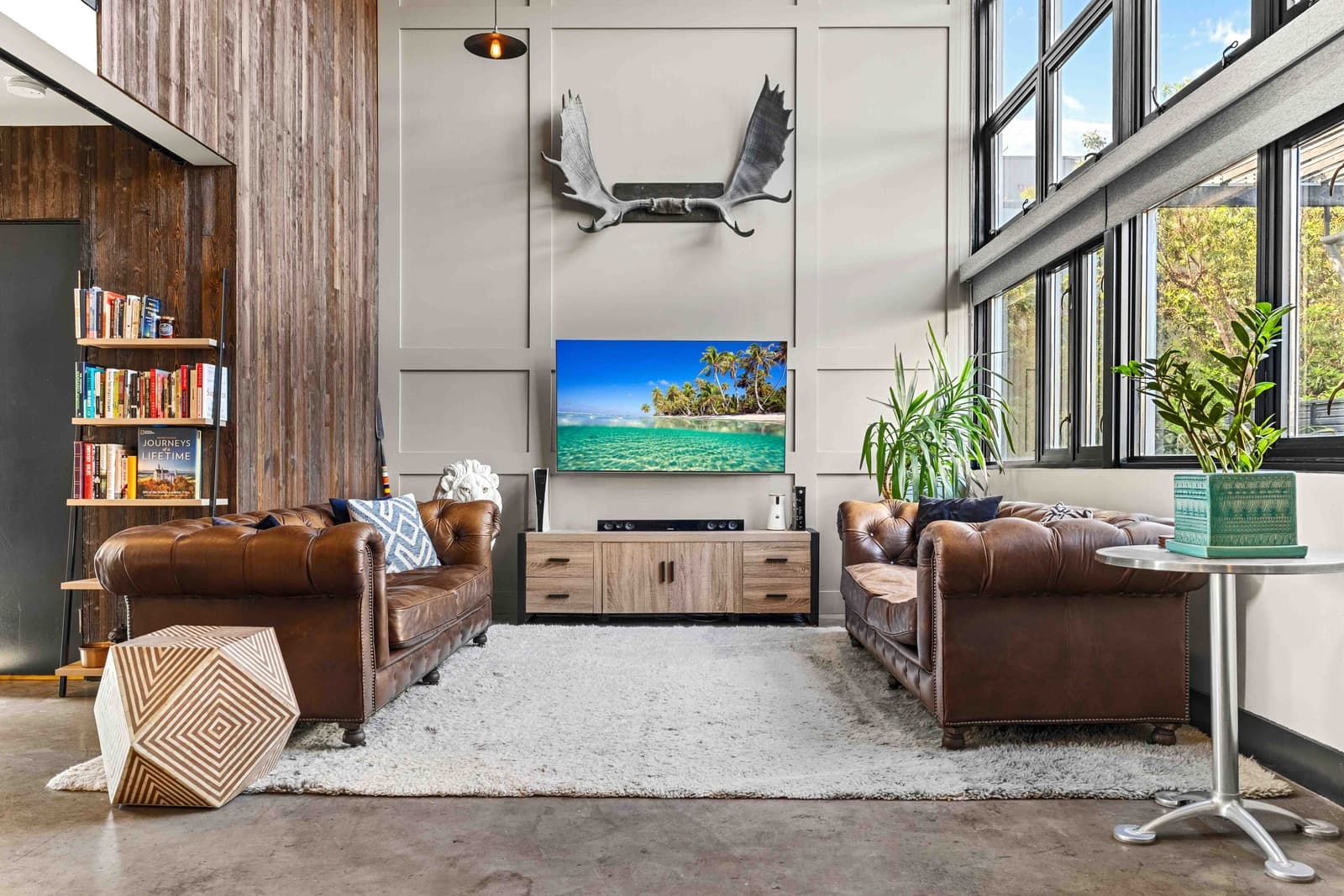
Real estate media is an investment with a measurable return. Treat it as a line item to minimize and you leave money on the table. In Redfin's analysis, professionally photographed homes sold for roughly $3,400–$11,200 over list price and about three weeks faster than comparable listings. An association across a large sample, not a guarantee. Redfin, 2013 A 3D tour, meanwhile, lets buyers walk every room at any hour, so the ones who book a showing arrive already familiar with the home. Against that, a full media bundle is a rounding error. The question worth sweating is which tier a specific listing needs to earn its keep.
Why "media cost" is the wrong frame
Every agent who has ever hesitated over a photography invoice is weighing the wrong number. What the shoot costs matters far less than what it makes you. Media is the only listing expense that shows up in every buyer touchpoint: the MLS thumbnail, the Zillow scroll, the Instagram story, the open house flyer. Nothing else you spend on a listing gets that much surface area.
Most buyers use the internet in their home search, per NAR research. So the photo, video or tour is very often the first impression a buyer forms before deciding whether the home is worth a showing, and sometimes the only one. Treat that impression as marketing spend with a return, and the math starts working in your favor right away.
What does the data say about the return?
An independent analysis anchors this conversation, and it doesn't come from a vendor with something to sell, with a few directional facts filling in the rest.
- Photography: Redfin found professionally photographed homes sold for roughly $3,400 to $11,200 over list price, and about three weeks faster, than comparable listings shot without a professional. An association, not a guarantee. Redfin, 2013
- 3D tours: a 3D/Matterport tour lets buyers walk every room at any hour. The ones who go on to book a showing arrive already familiar with the home, so the visits that happen are warmer and more committed.
- Video: only about 1 in 5 agents market a listing with video, so most don't produce one at all. A well-made listing film is competing against silence, not against another agent's better video. NAR
- Staging: 83% of buyers' agents say staging makes it easier for buyers to picture a home as their own. NAR 2025 Profile of Home Staging
Notice which of those is doing the heavy lifting. Photography is measured and broad; the rest earn their keep by giving a specific buyer a reason to lean in: a tour to walk, a film to watch, a room they can finally picture furnished. On a high-value listing, adding a 3D tour is a small line item against the size of the outcome it's protecting. That's leverage, plain and simple.
How much does real estate media cost in LA?
In Los Angeles, standard real-estate photo packages typically run about $150–$400. Full media bundles that combine photo, video, drone and 3D are priced higher based on square footage and the services included. That range is market context, not a promise of what any specific studio charges. The exact price for a listing depends on size, service mix and turnaround. For the full breakdown by service and square footage, see our 2026 LA photography cost guide.
The mental model that works is scaling media spend with what's actually at stake on the listing, instead of keeping it flat across every property you take on. A $500,000 condo and a $4,000,000 estate aren't competing for the same buyer's attention span or the same commission math, so they shouldn't get the same media budget.
It also helps to separate two very different kinds of "cost" that agents tend to conflate. First, there's the out-of-pocket price of the shoot itself, the number on the invoice. Then there's the opportunity cost of under-marketing: the buyers who scroll past a dim, poorly composed photo set before they ever read the listing description, the showings that never get requested because the gallery didn't earn a second look, the days on market that stack up while a comparable, better-marketed listing down the street gets the offer. Agents budget carefully for the first number and almost never account for the second. That's backwards, because the second number is usually the bigger one.
Who pays for the media, and does that change the math?
In most LA transactions, the listing agent fronts the cost of media, either personally or through the brokerage, and that spend is recovered out of commission at close (with margin, if the strategy works). That structure changes the ROI question. The seller isn't approving a marketing line item on their settlement statement; you're deciding, as the agent, how much of your own margin to reinvest in winning this specific listing faster and for more.
Framed that way, the decision looks a lot like any other marketing spend a business makes. What's the expected return per dollar invested, and does that return scale with how much is at stake. On a $500,000 listing at a typical commission split, a few hundred dollars of media is a small fraction of the expected payout. On a $3,000,000 listing the payout is proportionally much larger, and so is the cost of a listing that sits, gets a price cut, or closes for less than it should have because the media didn't do its job. The size of the check you'll eventually cash is exactly why the media decision deserves more attention as price climbs, not less.
What's the real cost of skipping media, or cutting corners on it?
The visible cost of good media is the invoice. The invisible cost of skipping it, or using a phone camera, an inconsistent freelancer, or a slow turnaround, is harder to see. It shows up in three places every agent recognizes once it's pointed out.
- Days on market. Redfin's finding had a speed half too: roughly three weeks faster, on top of the higher price. Every extra week a listing sits is a week of carrying costs for the seller, a week of "why hasn't this sold yet" anxiety, and a week where a fresher, better-marketed comparable listing can steal the buyer's attention. Independent
- Price reductions. A listing that under-performs online often gets "fixed" with a price cut rather than better marketing, even though the underlying problem may have been the photos, not the price. That's a permanent, compounding loss, not a one-time cost.
- The pitch you didn't win. Weak or inconsistent media on past listings is a quiet drag on the next listing presentation. Sellers increasingly ask to see recent work before hiring an agent, and a portfolio of forgettable photos is a harder sell than a portfolio of magazine-grade ones.
None of these show up on the invoice for the shoot you skipped. They show up weeks later, in a slower closing, a lower price, or a listing appointment that went to someone else. That's exactly why "media cost" feels smaller in the moment than it actually is over a full year of listings.
How do you match spend to listing value?
One rule covers most cases. As list price climbs, the cost of under-marketing climbs faster than the cost of the media itself. Leaving a slice of sale price on the table is real money on a $600,000 listing; on a $3,000,000 listing the same slip is an order of magnitude larger, against a media bundle that's a small fraction of that gap. The higher the stakes, the more the math tilts toward "spend more on media," not less.
| Listing value | What the listing needs | Why |
|---|---|---|
| Under $750K | Photo Essentials: HDR-balanced stills, MLS-ready | Volume market; buyers scan fast, so a clean, bright gallery is the non-negotiable floor. |
| $750K–$1.5M | Professional: adds cinematic video + aerials | Video is still open ground for most agents. It's the differentiator competing listings skip. |
| $1.5M–$3M | Premiere: adds a 3D/Matterport tour | Lets serious buyers walk the home before they visit, so the showings that happen are warmer and more committed. |
| $3M+ | Full bundle + twilight/branding | At this tier, the listing is also marketing for the agent. Every frame should be doing double duty. |
For a side-by-side on what changes between a starter listing and a luxury one, see media packages: $1M listing vs. $5M listing.

What's the actual mechanism behind "better media, better outcome"?
There's no magic in the return, just attention compounding through a predictable chain. Better media earns more scroll-stopping attention online, which drives more qualified showing requests, which creates competition among buyers, which shows up as a faster sale and often a stronger price. Each link in that chain is well documented on its own. The compounding is the part most agents underestimate.
Take it one link at a time. Attention first: with most buyers searching online, the photo gallery is the storefront window, and a buyer decides in seconds whether to keep scrolling or click in. Then qualified interest. Buyers who click through a strong gallery, watch a full listing video, or walk a 3D tour before requesting a showing arrive at the property already invested; the media sold them on the possibility before they ever got in the car. Then competition, because more qualified buyers requesting showings in the same window creates the conditions for multiple offers, and multiple offers are what push a sale price above list. The end of the chain (selling for more, and faster) is what Redfin's large-sample analysis found professional photography associated with: an association observed across many listings, not a guarantee for any one of them.
One more return never shows up in a single-listing P&L. About 80% of sellers interview only one agent before signing NAR 2025. A portfolio of consistently premium media is the reason the next seller calls you first, before they've called anyone else, which is the case for treating media as a standing investment in your name rather than a one-off cost per transaction. Our personal brand pillar guide goes deeper on that compounding effect.
Why speed matters as much as price in this equation
Agents tend to fixate on the sale-price half of the ROI story and underweight the speed half. But the two are connected in a way that compounds. A listing that sells three weeks faster makes for a happier seller, sure. It also hands the agent back three weeks of their own time, showings, price-reduction conversations, and carrying-cost anxiety on a single transaction. Multiply that across 15–20 listings a year and the time recovered from faster sales is itself a form of ROI: capacity freed up to take on the next listing sooner, which is its own compounding return that a single-listing calculation misses entirely.
How does the math change for photo, video and 3D specifically?
Not every media tier delivers its return the same way, which is why "spend more on media" is less useful advice than "spend more on the right layer of media for this listing." Each service justifies its cost in a different way.
- Photography is the floor, not the ceiling. It's the one enhancement every buyer will see, in every channel, whether or not they ever watch a video or walk a tour. Its ROI is the broadest and least optional. Redfin's $3,400–$11,200 finding is the baseline every listing should clear.
- Video earns its return mostly through differentiation, not volume. Because the majority of agents still don't produce listing video Independent, a well-made film doesn't have to out-compete a dozen other agents' videos. It just has to exist. That's a rare kind of ROI: the market hasn't caught up yet, so the same effort buys an outsized edge.
- 3D tours earn their return by pre-qualifying buyers before they ever request a showing. A buyer who has already "walked" the home virtually and still wants to see it in person is a warmer lead than one touring cold.
- Virtual staging earns its return on vacant or awkwardly furnished rooms specifically. 83% of buyers' agents say staging makes it easier for buyers to picture a home as their own NAR 2025, and virtual staging delivers that benefit at a fraction of the lead time of physical staging, always disclosed as digitally enhanced.
So instead of treating these as four competing line items fighting for the same budget, treat them as four different mechanisms, each solving a different problem a listing might have. The listing tells you which problems it actually has.
Does a $2M listing justify a bigger media budget?
Run the numbers plainly. Redfin's photography finding, at the low end, is roughly $3,400 over list price (an association, not a promise), and the dollar gap it points to scales with the size of the listing. Even stacking a full bundle (photo, video, drone, 3D, virtual staging), the media spend is a small fraction of the outcome it's protecting on a multimillion-dollar sale. At that price point the listing needs more than "nicer photos." It needs every enhancement that gives a buyer a reason to lean in, because the gap between doing it and skipping it is no longer trivial.
The same logic works in reverse for a starter listing. A $450,000 condo doesn't need a five-service bundle to hit the return threshold. Clean, bright, MLS-ready photography usually covers the ground that matters most for that buyer pool. Overspending on media for a listing that doesn't need it isn't smart either. Matching tier to value is the whole discipline.
How do you pitch this to a seller who's watching every dollar?
Sellers push back on media spend for the same reason agents sometimes do. It's a real, visible number, and the return is a probability, not a guarantee. The honest pitch skips "this will definitely add tens of thousands" and instead shows the seller what's actually been measured, letting the evidence speak for itself: in Redfin's large-sample analysis, professionally photographed homes sold for thousands more and about three weeks faster. An association across many listings, not a promise about theirs. Framed as "here's what's been independently measured across a large sample of listings," the conversation shifts from a sales pitch to a shared read of the evidence. That's usually a faster, more trust-building conversation than either overselling the number or underselling the value.
It also helps to be specific about what a seller is actually deciding. Nobody is weighing marketing spend in the abstract. The real decision is whether to under-market a listing that, in many cases, is the single largest asset they'll sell in years. Put that way, the media conversation becomes less about the invoice and more about protecting the outcome of the transaction itself.
What should an agent do with this?
- Stop asking "what's the cheapest package that covers this listing." Ask "what tier of media does this seller's price point justify."
- Treat the 3D tour line item as leverage rather than an upsell. It pre-qualifies serious buyers before they ever request a showing, so the visits that happen are warmer and more committed.
- Budget video for every listing over roughly $750K. It's still open ground most competing agents skip.
- Bring the independent research into the seller conversation directly. It reframes media from an expense you're asking them to approve into evidence you're both reading together.
- Think past the single transaction: consistent, premium media on every listing is also what makes the next seller recognize your name before they call anyone else.
Frequently asked questions
Is real estate media actually worth the money?
Independent research points that way for the most-studied enhancement. Redfin found professionally photographed homes sold for roughly $3,400–$11,200 over list price and about three weeks faster than comparable listings (Redfin, 2013. An association, not a guarantee.) A 3D tour adds to that by letting buyers walk every room before they visit, so the showings that happen are warmer. Media spend on a typical listing is a small fraction of that kind of outcome.
How much should I budget for photography and video in Los Angeles?
Standard real-estate photo packages in LA typically run about $150–$400, with full media bundles (photo, video, drone, 3D) priced higher based on square footage and services included. The right budget scales with the listing's value. A higher-priced home justifies a fuller bundle because the dollar gap the research points to (thousands to tens of thousands) grows with the sale price.
Does a 3D tour actually pay for itself?
On the right listing, it often does. A 3D/Matterport tour lets serious buyers walk every room at any hour before they ever request a showing, so the visits that happen are warmer and more committed, and adding the tour to a shoot is a small line item against the size of the sale it's helping protect. It's most worth adding on mid-to-high-value and vacant or hard-to-photograph homes.
Should every listing get the same media package?
No. Match the tier to what's actually at stake. A starter listing usually needs clean, bright, MLS-ready photography, while a listing in the mid-to-high range benefits from adding video, aerials and a 3D tour, since the dollar value of "selling for more, faster" scales with price. Overspending on media a listing doesn't need is as much a mismatch as under-spending on one that does.
Does better media help me win future listings, not just sell the current one?
Yes, indirectly but meaningfully. About 80% of sellers interview only one agent before signing (NAR 2025), which means being the recognized, consistently-premium name in a market is often the deciding factor before a seller ever calls. Media spent on one listing compounds into brand recognition that helps win the next one.
See your number
Get your exact package and price for this listing.
Enter the address and what the listing needs, and book the time that works online.
Book your shoot →